
Back to: The Data Aspect of AI

As artificial intelligence applications grow in complexity, the demand for large-scale datasets continues to increase. AI models, particularly deep learning systems, rely on vast amounts of data to achieve high accuracy and generalization. However, managing these large datasets poses significant challenges, including storage, processing, scalability, and ensuring data quality. Organizations that work with large AI datasets must implement efficient data management strategies to optimize computational resources and maintain the integrity of their models. Effective dataset scaling is crucial in fields such as autonomous systems, healthcare, natural language processing, and computer vision, where AI models must be trained on massive and continuously evolving datasets. Additionally, as AI becomes more integrated into real-time applications, such as personalized recommendations, fraud detection, and autonomous decision-making, organizations must handle both batch and streaming data at scale while maintaining efficiency and accuracy.
Challenges in Scaling AI Datasets
Handling large datasets comes with various challenges that require specialized solutions. Storage and computational limitations are primary concerns, as traditional data storage solutions may not efficiently accommodate petabytes of data. AI models require fast and efficient access to training data, making database management and retrieval speeds critical factors in the overall pipeline. Additionally, data quality and consistency must be maintained as datasets grow, ensuring that models learn from accurate and diverse information rather than redundant or biased data. Poorly managed data can introduce inconsistencies that degrade model performance, requiring constant oversight to maintain data integrity.
Scalability also introduces challenges in terms of data preprocessing, as cleaning and transforming large datasets require significant computational power. Traditional data preprocessing techniques may not be efficient for massive datasets, leading organizations to explore parallel processing and distributed computing solutions. Moreover, data security and compliance with regulatory frameworks such as GDPR and HIPAA become increasingly complex as datasets expand. Organizations must establish strict data governance policies to handle large datasets responsibly while protecting sensitive information. As data complexity increases, organizations must also account for heterogeneous data sources, including structured and unstructured data, which require different preprocessing workflows to extract meaningful insights.
Another major challenge is data redundancy, where repeated or unnecessary data entries increase storage costs and computational overhead. Duplicate or highly similar records must be identified and removed to ensure AI models train on unique and relevant information. Additionally, organizations must address the challenge of feature engineering at scale, ensuring that datasets contain the most valuable attributes for predictive modeling while avoiding unnecessary complexity that can slow down training processes. Scalable feature stores and real-time feature selection techniques can help mitigate these issues.
Best Practices for Scaling AI Datasets
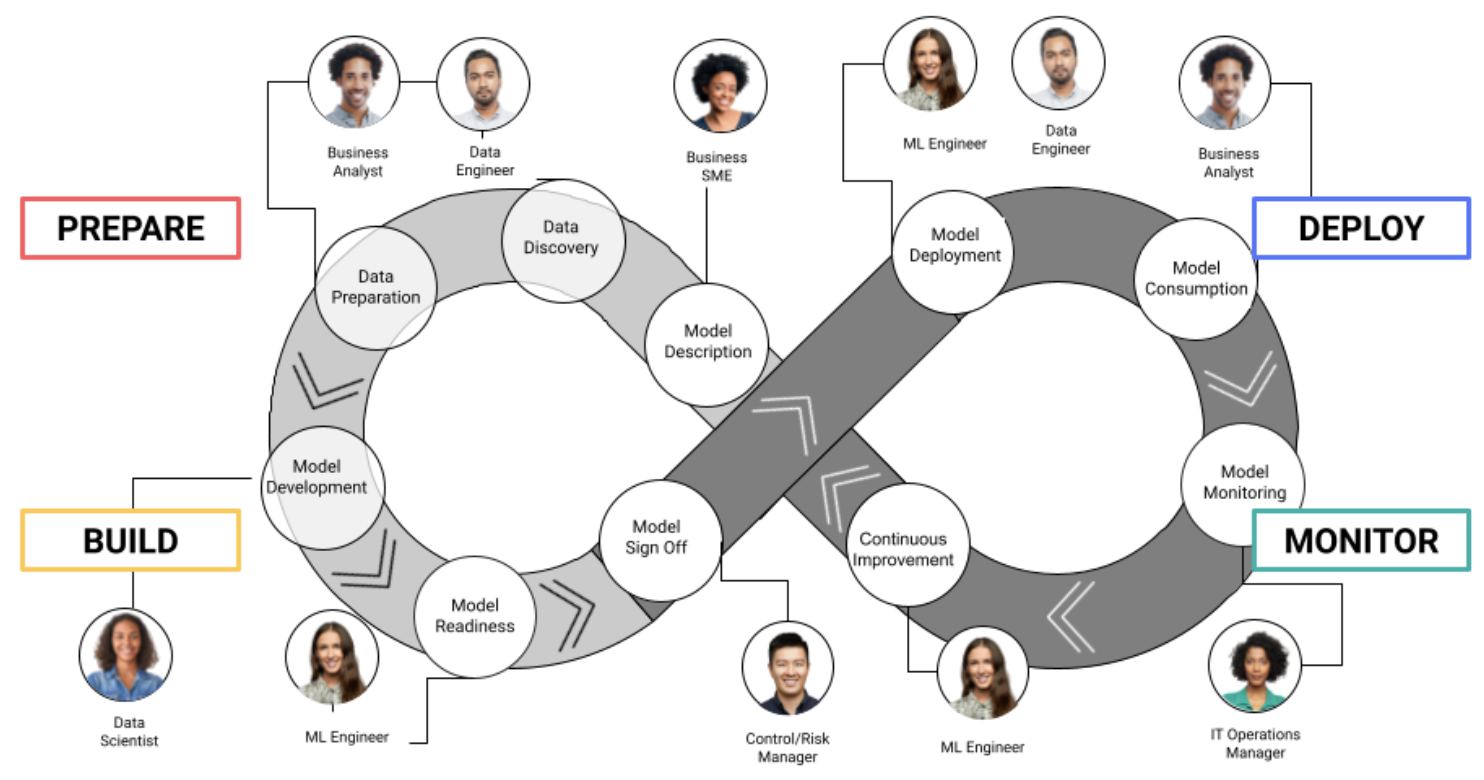
To overcome the challenges associated with large AI datasets, organizations must implement best practices that optimize storage, processing, and scalability. One of the most effective approaches is the use of distributed storage systems such as Hadoop Distributed File System (HDFS) and cloud-based storage solutions like Amazon S3, Google Cloud Storage, and Microsoft Azure Blob Storage. These storage systems allow for scalable and high-availability data storage, ensuring that AI models have seamless access to large datasets without bottlenecks. Organizations should also explore object storage solutions that allow for fast retrieval and distributed access.
Parallel processing frameworks such as Apache Spark and Dask enable efficient data preprocessing, allowing organizations to clean and transform data at scale. By leveraging these frameworks, AI practitioners can process vast datasets in a fraction of the time compared to traditional methods. Additionally, techniques such as data sampling and incremental learning can be used to train models efficiently without requiring access to the entire dataset at once. Organizations should also implement caching mechanisms to optimize access to frequently used datasets, reducing the need to repeatedly load large files into memory.
Another crucial aspect of scaling AI datasets is the use of automated data pipeline orchestration tools like Apache Airflow, Kubeflow, and MLflow. These tools streamline data ingestion, preprocessing, and training workflows, ensuring that large datasets are managed efficiently and in a reproducible manner. Implementing automated workflows reduces manual intervention, minimizes errors, and enables organizations to scale their AI systems seamlessly. Additionally, real-time data streaming frameworks like Apache Kafka and Flink allow organizations to process continuous data streams, enabling AI applications to make decisions based on up-to-date information.
Organizations can also implement model training strategies that optimize resource usage, such as distributed training and model parallelism. Distributed training frameworks like TensorFlow’s MultiWorkerMirroredStrategy and PyTorch Distributed Data Parallel (DDP) enable models to be trained across multiple GPUs or TPUs, significantly reducing training time for large datasets. Organizations should also adopt federated learning techniques when dealing with decentralized data sources, allowing AI models to be trained across different locations without requiring centralized data storage.
Data Governance and Security Considerations

As AI datasets grow, ensuring data governance and security becomes increasingly important. Organizations must establish data governance policies that define data ownership, access control, and compliance requirements. Implementing role-based access controls (RBAC) and encryption mechanisms helps protect sensitive data from unauthorized access. Data anonymization and differential privacy techniques can be employed to enhance data security, particularly in domains such as healthcare and finance where regulatory compliance is essential. Secure multiparty computation (SMPC) and homomorphic encryption are emerging techniques that allow organizations to perform AI computations on encrypted data without compromising privacy.
Version control for datasets is another critical aspect of data governance. Tools such as DVC (Data Version Control) and Pachyderm enable organizations to track changes in datasets over time, ensuring reproducibility and accountability in AI workflows. Maintaining proper documentation and metadata for datasets allows AI teams to understand the evolution of data and prevents inconsistencies in model training. Organizations should also establish lineage tracking, ensuring that every dataset used in model training is traceable to its source and transformation history.
Another important consideration is bias mitigation and fairness in large AI datasets. As datasets grow, biases in training data may become more pronounced, leading to AI models that unintentionally favor certain groups or exhibit discriminatory behavior. Organizations should implement bias detection tools such as IBM AI Fairness 360 and Google’s What-If Tool to evaluate models for unintended biases. Fair data sampling, reweighting techniques, and adversarial debiasing can help ensure that AI systems remain fair and representative of diverse populations.
Copyright 2025 MAIS Solutions, LLC All Rights Reserved