
Back to: Retrieval Augmented Generation and Biz4Group
The Role of Retrieval in RAG

Retrieval mechanisms are the backbone of Retrieval-Augmented Generation (RAG) systems, serving as a critical link between generative AI models and external knowledge sources. While generative models like GPT excel at creating fluent and coherent text, they rely solely on pre-trained datasets, which can lead to inaccuracies or outdated information. Retrieval solves this problem by dynamically fetching relevant, up-to-date data from external sources, ensuring that the AI output is both accurate and contextually appropriate.
Retrieval enables a RAG system to perform tasks with precision and reliability across a variety of domains, such as healthcare, finance, education, and customer service. For instance, in healthcare, a RAG system could retrieve the latest medical guidelines to support accurate diagnosis, while in customer service, it might fetch specific product details to address user queries effectively. This dual capability of accessing real-world data and generating meaningful responses distinguishes RAG systems from traditional AI models.
Retrieval’s Purpose in RAG Systems
At its core, the retrieval component ensures that the generative model is enriched with context-specific information that aligns with the user’s query. Unlike static generative models, which can only draw from their training data, RAG systems incorporate retrieval to provide real-time, dynamic responses. This makes retrieval indispensable for applications requiring:
- Accuracy: By fetching verified external data, retrieval ensures that outputs are grounded in factual correctness.
- Relevance: Retrieval aligns AI-generated responses with the specific intent of the query, avoiding generic or unrelated answers.
- Adaptability: Retrieval enables the system to access new information without the need for retraining the generative model, making it highly adaptable to dynamic and evolving knowledge bases.
For example, imagine a legal assistant using a RAG system. When asked about a recent court ruling, the system retrieves the relevant case document from a legal database, allowing the generative model to produce a response that incorporates the latest legal precedent. This capability not only enhances the AI’s utility but also builds trust with users who rely on the accuracy and timeliness of its outputs.
Complementary Role of Retrieval and Generation
Retrieval and generation work together seamlessly in RAG systems to overcome the inherent limitations of standalone generative models. Generative models are highly effective at producing coherent text but often lack factual accuracy or domain-specific expertise. Retrieval compensates for this by injecting real-world data into the generative process, creating outputs that are both accurate and contextually enriched.
For instance, in a business intelligence application, a RAG system could retrieve up-to-date market trends and financial data to generate a comprehensive report. The retrieval ensures factual accuracy, while the generative model synthesizes the data into a coherent narrative. This collaboration between retrieval and generation enables RAG systems to provide value in scenarios where static generative models would fall short.
Moreover, retrieval facilitates iterative refinement, where the system can retrieve additional information in response to follow-up queries. This multi-step reasoning capability allows RAG systems to handle complex tasks that require deeper analysis or multiple data points.
Real-World Applications of Retrieval
Retrieval mechanisms have transformative applications across various domains:
- Healthcare: Accessing the latest clinical research to provide evidence-based treatment recommendations.
- Customer Support: Fetching product manuals and troubleshooting guides to resolve user issues efficiently.
- Education: Pulling course-specific content to create personalized learning experiences for students.
- Legal Services: Retrieving case law and regulatory updates to support legal research and compliance.
Key Retrieval Methods
Understanding retrieval methods is essential to grasping how RAG systems dynamically fetch information from knowledge bases. Retrieval techniques have evolved significantly, moving from simple keyword searches to sophisticated embedding-based methods that leverage advanced algorithms for contextual relevance and speed. Each method serves specific needs and offers unique strengths, making them integral to the effectiveness of RAG systems.
Keyword-Based Search Techniques
Keyword-based retrieval is one of the earliest and most straightforward methods used in search engines and data systems. It relies on matching user queries with terms in a database or document repository. While simple, this technique is limited in handling nuanced or contextually complex queries.
For instance, a search query for “climate change effects” would retrieve documents containing these exact words, but it might miss relevant content phrased differently, such as “impact of global warming.”
Embedding-Based Retrieval and Vector Similarity
Embedding-based retrieval represents a significant advancement in retrieval technology. Instead of relying on exact keyword matches, this method uses vector representations to encode the semantic meaning of text. These vectors are then compared to identify the most relevant data points based on similarity scores.
For example, a query about “sustainable energy” could retrieve documents discussing “renewable power sources” by understanding the conceptual link between the terms. This technique enables retrieval systems to handle more abstract and flexible queries, enhancing their applicability across domains.
Modern Retrieval Algorithms: BM25 and ANN
BM25 is a widely-used probabilistic retrieval algorithm designed to rank documents based on their relevance to a query. It considers term frequency and document length, providing a balance between precision and recall. BM25 is particularly effective for text-heavy datasets, such as academic papers or legal documents.
Approximate Nearest Neighbor (ANN) algorithms, on the other hand, excel in high-dimensional spaces, such as those created by embedding-based systems. ANN efficiently identifies the closest matches to a query vector, enabling real-time responses in applications requiring large-scale data retrieval.
Both BM25 and ANN play critical roles in modern RAG systems, often working together to provide layered retrieval strategies that combine probabilistic and semantic approaches. This hybrid approach ensures that the system retrieves both broad and contextually nuanced data, meeting diverse user needs.
Building a Retriever

Developing an effective retriever is a critical component of a successful Retrieval-Augmented Generation (RAG) system. The retriever serves as the foundation for dynamically fetching the most relevant and contextually appropriate data from external knowledge sources. Here, we explore the key steps, resources, and fine-tuning processes necessary for building a robust retriever.
Steps to Construct an Effective Retriever
Building a retriever begins with understanding the domain and purpose of the RAG system. The following steps outline the process:
- Define the Knowledge Base: Identify the external data sources that the retriever will access. These can range from structured databases to unstructured repositories like research papers, product manuals, or customer support logs.
- Preprocess the Data: Clean and organize the data to ensure consistency. This includes removing duplicates, normalizing text formats, and indexing the content for efficient searching.
- Select the Retrieval Technique: Choose between keyword-based methods, embedding-based approaches, or a hybrid of both, depending on the system’s requirements.
- Implement Retrieval Algorithms: Integrate retrieval frameworks such as BM25 for text-heavy datasets or ANN for high-dimensional embeddings. These algorithms ensure efficient and accurate data fetching.
- Test and Validate: Evaluate the retriever’s performance using metrics such as precision, recall, and relevance scoring. Iterative testing helps identify areas for improvement.
Key Datasets and Resources for Retrieval
To build an effective retriever, access to high-quality datasets is essential. Domain-specific repositories and open-source datasets provide the foundation for training and evaluation. Examples include:
- General Knowledge: Wikipedia or Common Crawl datasets.
- Healthcare: PubMed for medical research and clinical guidelines.
- Legal: Case law databases such as OpenCaselaw.
- Customer Support: FAQ logs and product manuals from internal systems.
Leveraging these resources ensures that the retriever can handle domain-specific queries with precision.
Fine-Tuning Retrievers for Specific Domains
To maximize relevance and accuracy, retrievers must be fine-tuned for the domain they serve. This involves:
- Domain-Specific Training: Use domain-relevant datasets to train the retrieval model, ensuring it understands the unique terminology and context of the field.
- Embedding Optimization: Fine-tune embeddings to reflect the semantic relationships prevalent in the domain. For instance, in finance, embeddings should capture relationships between terms like “investment” and “portfolio.”
- Iterative Refinement: Regularly update the retriever with new data and feedback from users to maintain its accuracy and relevance.
Conclusion
Building a retriever is a meticulous process that requires attention to detail, domain knowledge, and a focus on optimization. By carefully following these steps and leveraging the right resources, developers can create retrievers that significantly enhance the performance and reliability of RAG systems.
Optimizing Retrieval Performance
Optimizing retrieval performance is a crucial aspect of ensuring that a Retrieval-Augmented Generation (RAG) system operates efficiently and accurately. The effectiveness of the retriever directly impacts the quality of the system’s outputs, as it determines how quickly and accurately relevant information can be fetched. Below, we explore techniques to enhance retrieval performance and discuss how to balance computational efficiency with relevance.
Techniques to Improve Retrieval Speed and Accuracy
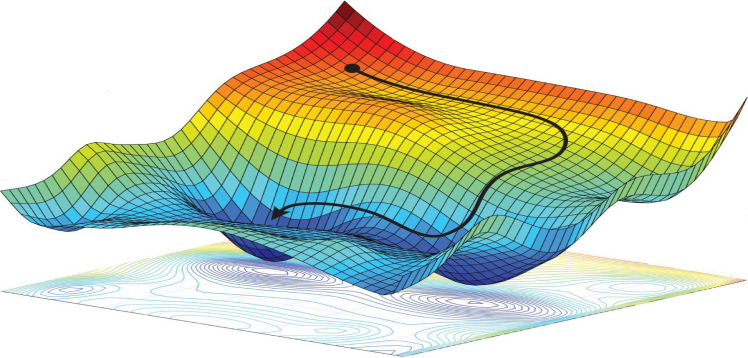
- Index Optimization: Ensuring that the indexed data is structured for fast and efficient searches is foundational. Techniques such as hierarchical clustering and pre-computed embeddings can significantly reduce query processing times.
- Algorithm Selection: Choosing the right retrieval algorithm is vital. BM25 is ideal for text-heavy datasets where term frequency is critical, while Approximate Nearest Neighbor (ANN) is better suited for high-dimensional embedding spaces. Combining these methods in a hybrid approach can enhance both precision and recall.
- Caching Frequently Accessed Data: Implementing caching mechanisms for commonly retrieved documents or data points reduces the load on the retriever and speeds up response times.
- Parallel Processing: Distributing retrieval tasks across multiple processors or nodes can dramatically increase throughput, making the system scalable for large datasets.
- Dimensionality Reduction: For embedding-based methods, reducing the dimensionality of vectors using techniques like Principal Component Analysis (PCA) can improve computational efficiency without significant loss of relevance.
Balancing Computational Efficiency with Relevance
Efficient retrieval must strike a balance between speed and the quality of retrieved data. While faster retrieval is desirable, it should not come at the expense of retrieving relevant and accurate results. Strategies to achieve this balance include:
Feedback Loops: Incorporating user feedback to refine retrieval accuracy over time creates a self-improving system that optimizes both speed and relevance.
Dynamic Thresholding: Adjusting retrieval thresholds based on query complexity can ensure that simpler queries are processed faster, while more complex ones receive additional computational resources.
Relevance Scoring: Prioritizing relevance over sheer speed by implementing advanced scoring mechanisms that weigh contextual importance ensures higher-quality outputs.
Copyright 2024 Mascatello Arts, LLC All Rights Reserved