
Back to: Internet of Things and Databot
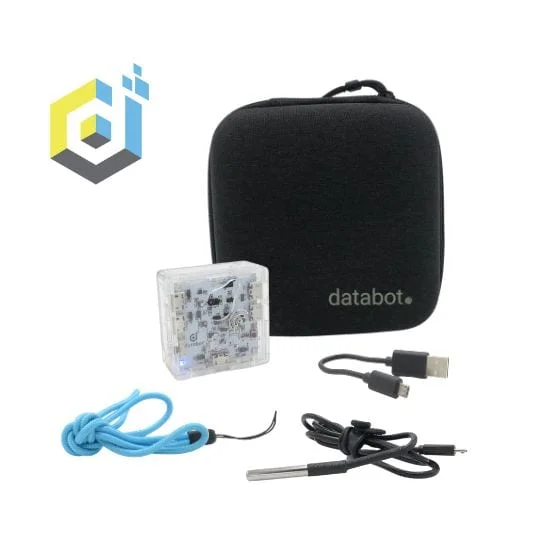
What is the Databot?
The Databot is a small, portable device that contains a suite of sensors capable of measuring environmental factors such as temperature, light, sound, humidity, air pressure, and more. It is designed to be user-friendly and versatile, making it ideal for students, educators, and hobbyists alike. The Databot integrates easily with smartphones, tablets, or computers, allowing users to visualize data and conduct experiments in real-time.
Unlike traditional data collection tools, the Databot provides an all-in-one solution that simplifies the process of gathering, processing, and analyzing information. By enabling hands-on learning, it encourages users to engage deeply with scientific concepts and problem-solving techniques.
Key Components of the Databot
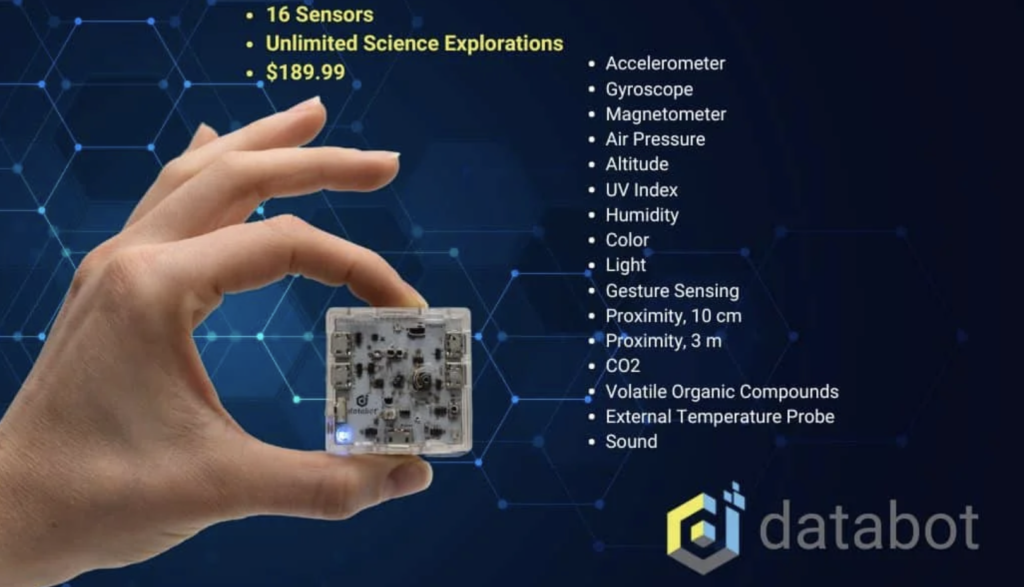
- Sensors: The Databot includes a variety of built-in sensors, such as:
- Temperature Sensor: Measures the surrounding air temperature.
- Light Sensor: Detects the intensity of ambient light.
- Sound Sensor: Captures and measures sound levels in decibels.
- Humidity Sensor: Monitors the moisture content in the air.
- Air Pressure Sensor: Measures atmospheric pressure.
- Connectivity: The Databot supports Bluetooth and USB connections, enabling users to pair it with mobile devices or computers for data visualization.
- Power Source: A rechargeable battery powers the Databot, making it portable and convenient for field experiments.
- Data Visualization Tools: Paired software or apps allow users to graph and analyze data collected by the Databot, providing insights into real-world phenomena.
Practical Example: Using the Databot for Environmental Monitoring
One practical application of the Databot is monitoring air quality. By deploying the Databot in different locations, users can measure temperature, humidity, and air pressure to evaluate environmental conditions. For instance, a classroom activity might involve students comparing data collected from indoors and outdoors to study how air quality changes with location and weather conditions. This hands-on approach helps learners understand how data is collected and interpreted to draw meaningful conclusions.
Reflection Questions
- What advantages does the Databot offer compared to traditional data collection methods?
- How can the Databot’s portability enhance its applications in fieldwork and experiments?
- What kinds of experiments could you design using the sensors available on the Databot?
By exploring the capabilities of the Databot in this lesson, students will gain a solid understanding of its potential as a tool for scientific exploration. The Databot sets the stage for more complex projects and applications in subsequent lessons, fostering curiosity and innovation.
Copyright 2025 MAIS Solutions, LLC All Rights Reserved